 English
English
English


Exhaust valve is a device that automatically discharges accumulated gas in pipelines and prevents medium leakage. It is mainly used in liquid pipeline systems such as water supply and heating.
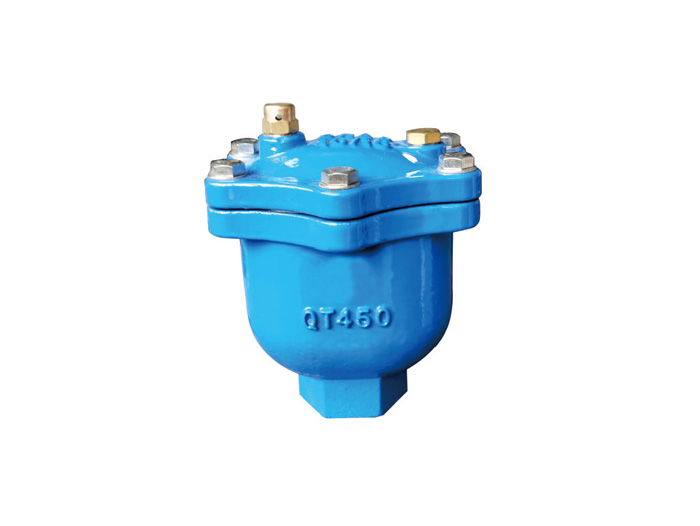
1、 Why do we need exhaust
The main sources of gas in pipelines are: the air originally present in the pipeline during the initial water flow, the air dissolved in the water that precipitates due to temperature and pressure changes, and the air sucked in by loose pipeline interfaces. These gases will accumulate at high points in the pipeline, causing problems such as poor water flow, air resistance, and water hammer, so they need to be discharged in a timely manner.
2、 Core working principle
The common type of exhaust valve is a floating ball structure, which works based on the balance of buoyancy and gravity and is divided into three states.
1. Large exhaust state
When the pipeline is first filled with water, the interior is filled with air. Water pushes air into the exhaust valve, and there is no liquid inside the valve. The float is in a low position, and the exhaust hole is fully opened. The air inside the pipeline is discharged in large quantities from the exhaust hole under the action of water pressure.
2. Closed state
As the air continues to be expelled, water gradually enters the exhaust valve and submerges the float. The floating ball is lifted upwards by the buoyancy of water and drives the valve disc to close the exhaust hole through the connecting rod. At this time, water will not flow out from the exhaust hole, and the system is operating normally.
3. Trace exhaust status
During the operation of the system, air dissolved in the water gradually precipitates, forming small bubbles. Bubbles gather at the high point of the pipeline and enter the exhaust valve, occupying a portion of the volume and causing the liquid level inside the valve to drop. The floating ball descends accordingly, and a small gap is opened in the exhaust hole to release gas. After the gas is exhausted, the liquid level rises again and the float closes the exhaust hole again. This process automatically cycles and continuously releases the precipitated gas.
4. Inhalation state
When the pipeline is emptied or negative pressure is generated, the external air pressure is greater than the internal pressure, which pushes the floating ball to sink, opens the exhaust hole, and allows air to enter the pipeline, eliminating negative pressure and preventing pipeline collapse.
3、 Summary of Work Process
The operation of the exhaust valve can be summarized in four sentences:
When there is gas: the float sinks, the exhaust hole opens, and the gas is discharged.
When there is water: the float rises, the exhaust hole is closed, and the water does not leak out.
Trace gas: intermittently activated, automatically expelling small bubbles.
When under negative pressure: automatic suction to protect the pipeline.
The entire process is fully automated, without the need for manual operation or external power. Exhaust valves are usually installed at high points in pipelines and kept in a vertical position to function properly.

